
Improve Your Brand with AI-Driven Reputation Tactics
AI Strategy, Reputation Management
Why Reputation & Reviews Are Your AI-Era Power Move
AI-generated search results are putting your review score front and center. For brands working with an AI agency, automating reputation and reviews isn’t just smart marketing—it’s a fast, visible win that proves the value of AI from day one. And as AI reshapes how customers discover and evaluate businesses, that first impression has never been more important.
Reputation & Reviews: Evergreen, But Newly Urgent
Reputation has always mattered. What’s changed is where it shows up and who is presenting it. Increasingly, customers are not scrolling through ten blue links—they’re asking AI assistants and search experiences powered by large language models. Those AI systems summarize your business in a sentence or two, and review scores are now a key part of that snapshot. This shift means the same reputation you’ve been building for years is now being compressed into a few decisive signals.
When someone asks, “What’s the best dentist near me?” or “Which agency is most trusted for B2B marketing?”, AI doesn’t just list websites. It surfaces:
Your average star rating and total review count
Recent review sentiment (positive, neutral, or negative)
Standout phrases customers repeat about your brand
That means your online reputation is no longer just for human visitors on Google, Yelp, or G2—it’s training data for the AI systems shaping customer decisions. Reputation & reviews have always been evergreen, but in an AI-first search world, they have become urgently strategic.In other words, what once felt like a “nice to have” now sits at the center of how you’re ranked, summarized, and recommended.
📌 Key Takeaway (Real-World Example): A regional dental group with 7 locations moved from a 4.0 to 4.6 average rating on Google within six months by focusing on consistent review generation. In AI-powered local search, assistants began describing them as “the highest-rated family dentist in the area,” which correlated with a noticeable uptick in new-patient inquiries. This is a clear illustration of how small, steady improvements in reviews can cascade into outsized visibility and demand.
Why AI Agencies Start With Reviews: Fast, Visible Wins
If you’re partnering with an AI agency, you want proof of value quickly. Reputation and reviews are one of the easiest places to demonstrate immediate impact because the signals are:
Public: Star ratings and review counts are visible in search, maps, and marketplaces.
Measurable: You can track changes in ratings, volume, and response times week by week.
Directly tied to revenue: A higher rating and more recent reviews often lift conversion rates and average order value.
For your AI agency, this makes reputation automation a perfect “first project”: it’s low friction, low risk, and highly visible. For you, it’s a way to turn what used to be a manual chore into a growth lever that keeps working in the background. Once those quick wins are in place, it also becomes much easier to build internal momentum for more advanced AI initiatives.
“A mid-market B2B SaaS company we worked with had strong customer satisfaction but only a handful of public reviews. After launching an automated review program with their AI agency, they grew from 18 to 220 reviews on G2 and Capterra in four months, lifted their average rating from 4.1 to 4.7, and saw a 22% increase in trial-to-paid conversions from prospects who mentioned reviews.”
— Example AI Agency Case Study
How Automating Reviews Works (And Why It’s So Easy to Win)
Automating your reputation program doesn’t mean handing everything over to robots. It means using AI to handle the repetitive work, so your team can focus on delivering great experiences and resolving real issues. A typical AI-agency-led setup looks like this:
Smart review requests: After a purchase, visit, or completed project, customers automatically receive a tailored, on-brand request to leave a review on the platforms that matter most for your business.
AI-drafted responses: Incoming reviews are analyzed for sentiment, urgency, and topic. The system drafts professional replies your team can approve in seconds—keeping response times low and tone consistent.
Reputation insights: Dashboards highlight recurring themes, emerging issues, and strengths you should spotlight in marketing and sales messaging.
💼 Case Snapshot: A multi-location home services brand connected its CRM to an AI-powered review workflow. Every completed job triggered a personalized text and email asking for feedback. Within 90 days, review volume increased by 3.5x, average rating climbed from 4.2 to 4.5, and call center staff reported that new customers were “choosing us because of the reviews” in recorded calls. This kind of closed-loop setup shows how operational data and AI can work together to steadily compound your reputation.
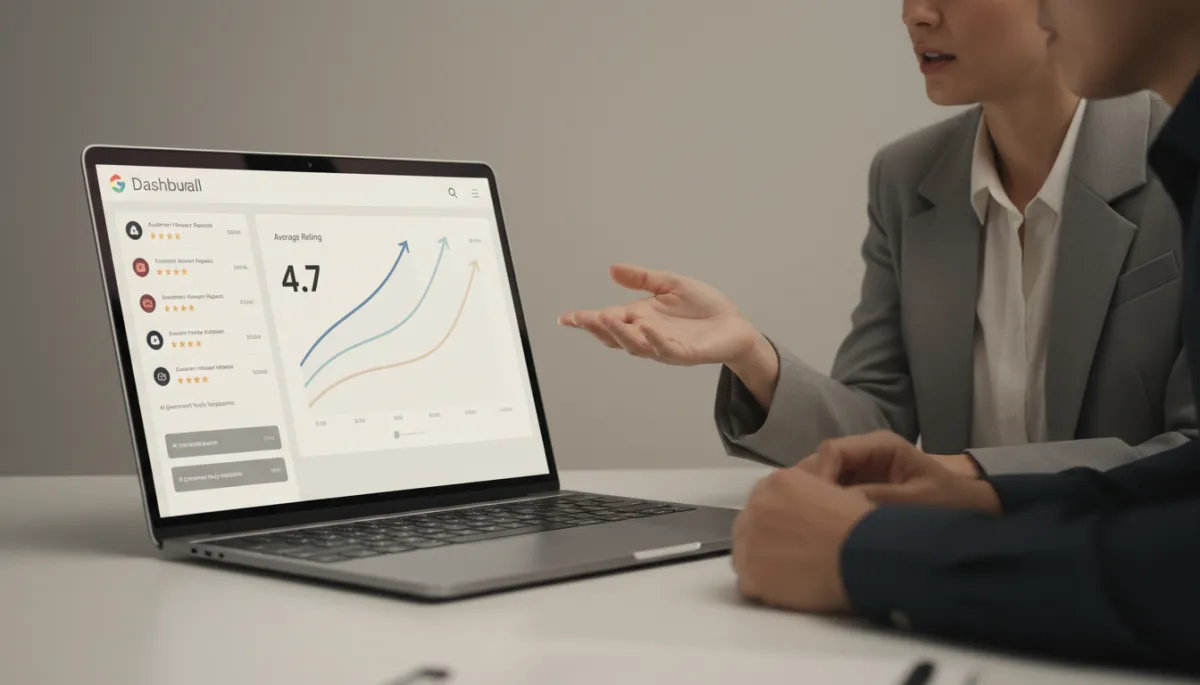
Automated review flows often boost review volume and ratings within the first 60 days.
💡 Pro Tip: Ask your AI agency to run a short pilot on one location, product line, or market. A quick bump in review volume and rating gives you a compelling internal case to scale. Once you’ve validated the impact in a controlled setting, expanding to the rest of your business becomes a straightforward next step.
The AI-Search Payoff: How Better Reviews Shape What Customers See
As AI-generated search results become the default, your automated reputation engine quietly feeds those models with better data:
More recent, positive reviews tell AI you are relevant and trusted.
Clear, consistent themes in reviews help AI summarize your strengths accurately.
Faster responses and resolved issues signal that you care about customer experience.
The result: when prospects ask AI-powered search tools for recommendations, your brand is more likely to be surfaced—with a strong rating, healthy review volume, and a narrative you’re proud of. Over time, this virtuous cycle can shift you from being one of many options to being the obvious choice.
📊 Real-World Impact: A boutique hospitality group that automated review requests and responses saw its average Google rating rise from 4.0 to 4.4 across three properties. Within a quarter, AI travel assistants and meta-search tools began recommending them as “top-rated stays for business travelers,” contributing to a 15% lift in direct bookings and reduced reliance on paid listings. For brands in competitive categories, that kind of shift in how AI describes you can materially change your revenue mix.
Partnering With Your AI Agency: Next Steps
If you’re already working with an AI agency—or considering it—reputation & reviews should be high on your roadmap. It’s an evergreen discipline that has become mission-critical, and automating it is one of the easiest, fastest wins you can capture together. From here, the goal is to turn that understanding into a concrete, collaborative plan.
Ask your agency to:
Audit your current review footprint across key platforms.
Design an automated review request and response workflow tailored to your customer journey.
Set clear 30–60–90 day targets for review volume, rating, and response time—so you can see AI’s impact quickly.
In an AI-shaped search landscape, your reputation is no longer a side project. It’s a strategic asset—and with the right AI partner, it can be one of the simplest, most convincing wins you achieve. Start with reviews, prove the value, and let that momentum carry your broader AI strategy forward.